Workshop Autism
Autism: Information, Support, and Direction for Families
Receiving the suspicion or diagnosis of autism for a child often brings many emotions at once. Fear, uncertainty, insecurity, comparisons, and, many times, emotional overwhelm become part of the process. But there is something very important every family needs to remember: a diagnosis does not define a child’s future — it provides direction.
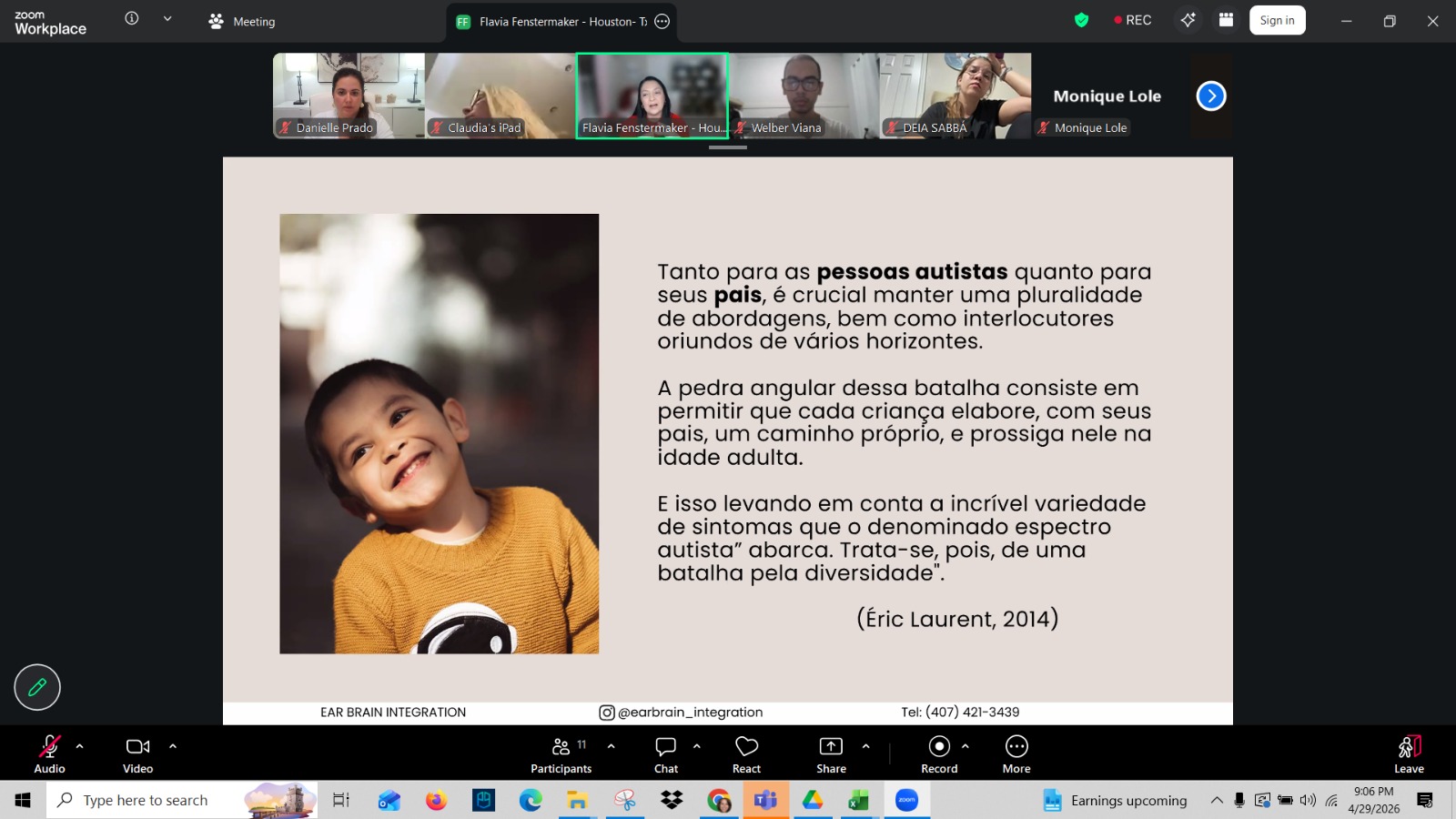
Autism Spectrum Disorder (ASD) is a neurodevelopmental condition that mainly affects communication, social interaction, and behaviors/interests. It is called a “spectrum” because every individual presents different characteristics and support needs. Some children require more support in daily life, while others develop greater independence. Autism is not a disease to be “cured,” but rather a different way the brain develops.
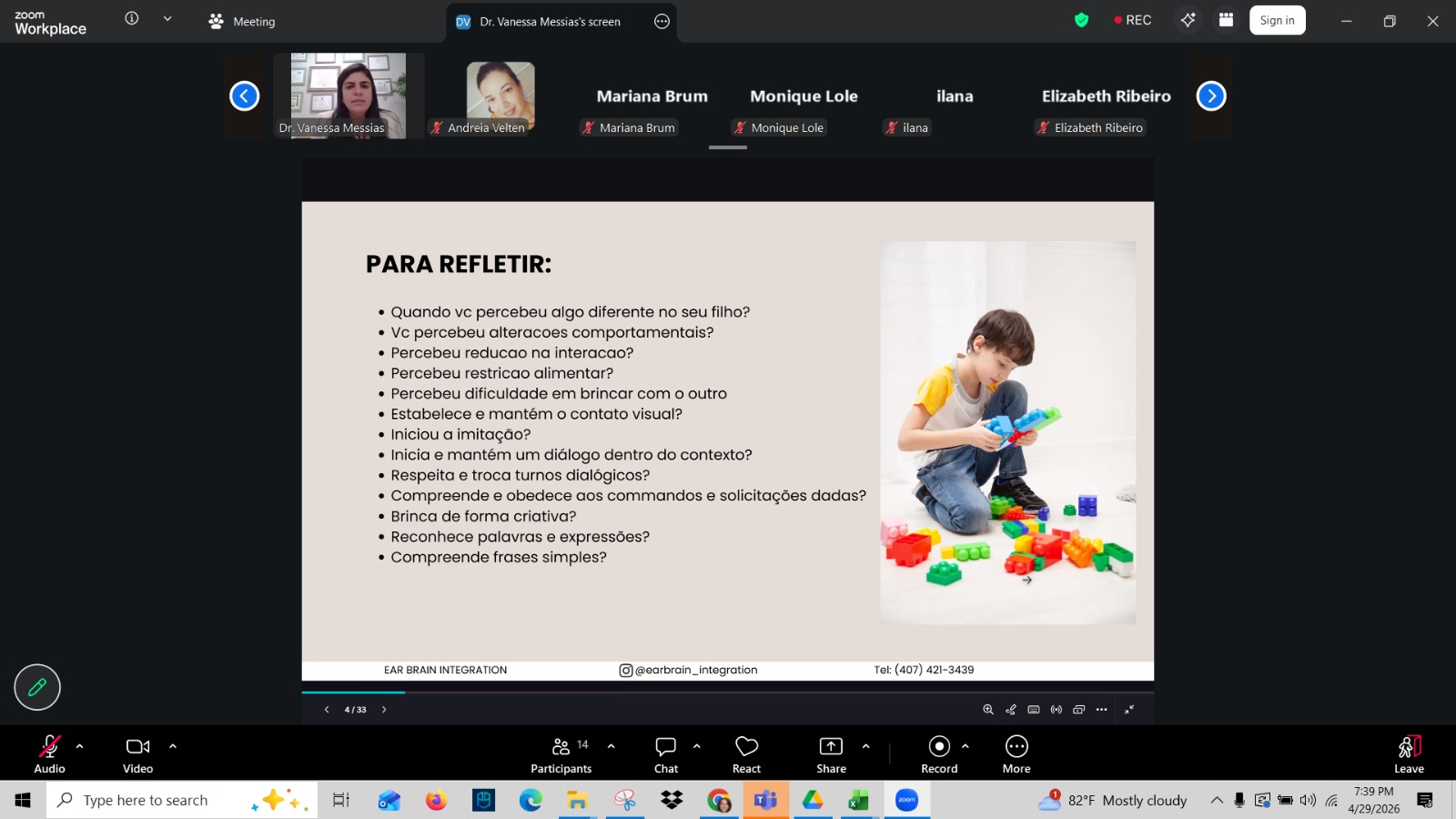
Many parents report noticing signs early in childhood, but not always understanding what they meant. Changes in communication, difficulty with interaction, limited eye contact, restricted interests, sensory sensitivities, or challenges playing with other children can be some of the first signs families observe.
In communication, signs may include speech delay, difficulty initiating or maintaining conversations, repetitive language, and challenges understanding irony or metaphors. In social interaction, it is common to notice difficulties understanding emotions, sharing interests, and building social connections.
It is important to understand that language and communication are not exactly the same thing. Language is the ability to understand and use words, verbally or nonverbally. Communication is broader — it involves exchanging information, feelings, intentions, and connections through words, gestures, facial expressions, and behaviors. Many children with ASD can communicate functionally but still experience challenges with social interaction and the pragmatic use of language.
Another fundamental point is understanding that an ASD diagnosis should not be based on only one scale or isolated test. The process involves specialized clinical evaluation, multidisciplinary analysis, and DSM-5 criteria. Different tools may assist in the evaluation process, such as ADOS-2, CARS, ADI-R, M-CHAT, Vineland, and other important scales.
When we talk about intervention, there is no single formula. Every brain is unique, and every child requires an individualized plan. Some of the most commonly used approaches include Speech Therapy, Psychology/Psychoanalysis, Occupational Therapy, Neuropediatric/Psychiatric follow-up, ABA, DIR Floortime, sensory stimulation, and the Tomatis®️ Method.
But there is one thing I consider essential in any therapeutic process: parents are a central part of the intervention. Learning happens in daily life, in real interactions, through play, routines, and the quality of connection built with the child. Professionals guide, support, and adjust strategies, but the family remains a fundamental part of development.
Throughout my journey at Ear Brain Integration, I have seen how the right information can transform fear into clarity and despair into direction. Families do not have to walk this path alone. With proper support, structured intervention, and compassionate care, the future continues to be full of possibilities.
—
Dr. Vanessa Messias
Doctor of Audiology • Neuro-Auditory Specialist • Speech Therapist
Founder of Ear Brain Integration